
 Score total
 Scores par catégorie
Services
Représentation et défense des intérêts des étudiants
Économie politique parascolaire
Penalties
Fondée en
Étudiants représentés
Annual Revenue
The Queen’s University Alma Mater Society (AMS) is one of the oldest campus-level postsecondary student governments in Canada. It has existed for over a hundred and fifty years. The AMS excels in service provision and, in this area, serves as a model example for other student unions across the country. Overall, it is a high-performing student union. Additionally, its main campus is well-known for high levels of student engagement in social events. One area that we recommend that the AMS focuses on in the future is improving its transparency.
A1. What is the service spending per capita? | 1/1 |
Service | Spending |
Schedule A (Service Expenses) | $3,413,423 |
Schedule D (Accessibility Queen’s, Advantage, AMS Membership Bursary, AMS Student Centre, Health and Dental Plans) | $6,439,447 |
Bus-It | $3,105,289 |
Total: | $12,958,159 |
We estimate that AMS 2023-2024 service spending was $12,958,159 according to its audited financial statements for that year.
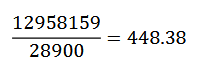
Assuming 28,900 students based on 2024 Universities Canada enrollment statistics cited above, service spending per capita is about $448.38. This is above the U15 average of $381.83.
A2. What essential services does the union offer? | 7/8 |
Health Aid (1)
The AMS provides its members with a health and dental insurance plan.
Aide financière (1)
The AMS offers financial aid to students, one example of which is a financial aid bursary to students in need.
Academic Services (0)
We did not find a student union-run tutoring service or any other service providing academic support.
Aide au transport (1)
The AMS offers students a subsidized transit pass through a partnership with relevant transportation authorities.
Legal aid (1)
The AMS supports legal aid services through funding to Queen’s Legal Aid.
Aide alimentaire (1)
The AMS runs a food bank for students in need.
Counseling Aid (1)
The AMS provides counseling aid through the Peer Support Centre.
Installations sociales et de divertissement (1)
The AMS operates a student centre that provides students with a variety of spaces for activities. The AMS also funds community and support centres and programs for marginalized students.
A3. What other services does the union offer? | 1/1 |
The AMS runs many other services, including but not limited to peer support services and a housing resource centre, including bookable spaces, rental lockers, and audio/visual equipment rentals.
B1. Is the union’s governance structure clear and transparent? | 3.5/4 |
Accessible explanation of the governance structure (1)
The executive and legislative branches of the AMS are clearly outlined on the website.
Autorité et responsabilité sont clairement définies à chaque niveau de gouvernance (1)
Clear accountability, removal, and succession procedures are outlined in the governing documents of the AMS.
Procédures transparentes de destitution et de succession (1)
There are two ways to remove AMS executives: a 2/3 majority vote of the legislative body or a petition to initiate a referendum signed by at least 10% of the membership, which would equate to about 2,000 signatures.
Periodic and impartial performance evaluations of staff (0.5/1)
There is a Standards of Performance policy governing staff conduct that contains clauses for disciplinary investigations (p. 17-18). However, we did not find definitive evidence that the AMS does regular staff performance evaluations.
B2. Is the union actively involved in representing its students? | 4.5/5 |
External representation (1)
The AMS is a member of the Ontario Undergraduate Student Alliance. It is not a member of any national or international student union.
While the AMS has been involved in the Undergraduates of Canadian Research-Intensive Universities (UCRU) that focused on supra-campus advocacy (we’re not sure if UCRU still exists because its website appears to be down at the time of writing), we do not consider UCRU to be a student union, but rather a more limited form of student representation that is in our view not enough to merit points in this category.
Internal representation (0.5)
The AMS does not appear to have formal representation on the Queen’s University Board of Trustees. Instead, student representatives to the Board of Trustees are elected separately and do not represent the AMS.
Advocacy Campaigns (1)
The AMS actively engages in advocacy. A recent example includes a reported victory in its 2023-2024 annual report to increase accountability measures in Queen’s University’s Policy on Sexual Misconduct and Sexual Violence Involving Students, though how these measures were precisely improved due to the AMS’ advocacy was not specified.
Participation in Municipal Affairs (1)
The AMS regularly engages in campus and municipal advocacy. Page 28 of the AMS’ 2023-2024 Annual Report specifies that the AMS sent multiple delegations to the Kingston, Ontario “city council, planning committees, as well as the Police Services Board” regarding issues pertaining to “struggles that students are facing in housing, policing, and many other fields.” In the same report, the AMS claims a victory of “a Homecoming with no violent offences and a St. Patrick’s Day with no violent offences and a very low amount of overall ticketing” (p. 28). This is notable given past town and gown issues between Queen’s University students and the city regarding issues caused by large social events.
Student Consultations (1)
The AMS conducts student surveys to gather feedback. There also is a general assembly mechanism, where minutes and details are updated regularly on its official site
B3. Are there opportunities for democratic engagement? | 6.5/8 |
Voter Turnout (1)
2025 voter turnout was about 20.4% according to Simply Voting. This is higher than the U15 average of 17%.
Elections Policy (1)
The AMS has an Elections & Referenda Policy and a Civic Engagement Policy that can be amended by its legislative body.
Election Integrity Measures (0.5)
Election rules are embedded in the student union’s governing documents.
There is a structured process for elections and referenda including but not limited to notice periods, nomination periods, campaign periods, and voting periods.
Voting takes place online through an independent third-party company.
While the Civic Engagement Policy does outline the role of penalties in violating clauses, set penalties for specific infractions are not clearly defined, leaving room for subjectivity and interpretation regarding severity of sanctions that should be imposed. However, the Policy Infringement Protocol Policy and Procedures (which also covers Elections) does outline specific penalties, including maximum fine rates ($1,000 payable to AMS), decisions which are made by the AMS Judicial Committee to rule on the severity of alleged violations.
Appointed civic engagement officers administer the election and are accountable to the AMS’ judicial branch.
Fair eligibility requirements? (1)
The election rules indicate that eligibility is open to all members (Elections and Referenda Policy, Part B, Section 2.1, p. 13).
Electoral Speech Protections (1/2)
Campagnes négatives (1)
The rules for elections and referenda do not explicitly prohibit negative campaigning.
Spending limits (0)
The Civic Engagement Policy mentions that campaign spending limits are ratified annually by the legislative body (a detail also confirmed by the Elections & Referenda Policy), but we did not find legislative body minutes online to specify the amount.
Surveillance des élections : dépôt de plaintes et d'appels (1)
There is a clear complaint and appeal process through the AMS’ judicial branch.
Any member of the AMS, the public, or a Campaigning Group may submit complaints or allegations regarding policy infractions [Civic Engagement Policy, Part E, Section 1, 3]. The Civic Affairs Office (CAO), co-led by the Chief Electoral Officer (CEO) and Chief Returning Officer (CRO)—collectively the Civic Officers—is responsible for the enforcement of the Civic Engagement Policy [Civic Engagement Policy, Roles and Responsibilities (Civic Officers)]. Complaints must be submitted in writing using the designated form and brought forward within the timelines stipulated in the Society policy on Elections and Referenda [AMS Constitution, 4.3.3]. Specifically, a complaint must be received no later than forty-eight (48) hours after the conclusion of the Voting Days, and no more than twenty-four (24) hours after the alleged infraction has taken place [Civic Engagement Policy, Part E, Section 1, 4].
The Chief Governance Officer (CGO) serves as the complaint manager for all submitted complaints [Civic Engagement Policy, Part E, Section 1, 5; Civic Engagement Policy, Roles and Responsibilities (Chief Governance Officer)]. The CGO reviews the complaints to determine if there are reasonable grounds to believe that a violation has occurred [Civic Engagement Policy, Part E, Section 1, 5]. If the CGO determines that reasonable grounds exist, they contact all necessary parties to gather evidence before referring the case to the Civic Officers [Civic Engagement Policy, Part E, Section 1, 5(b)]. The Civic Officers then hold the sole authority to make findings of a violation and issue the appropriate sanctions [Civic Engagement Policy, Part E, Section 1, 5(b)]. Prior to assigning a penalty or disqualification, the Civic Officers are required to contact the Campaign Group to discuss the infraction [Civic Engagement Policy, Part E, Section 3, 1]. Campaign Groups are held responsible for the conduct of all members and volunteers listed on their Campaign Team [Civic Engagement Policy, Part E, Section 1, 2].
Escalation and Judicial Appeal
All decisions rendered by the Civic Officers regarding sanctions are subject to appeal to the Judicial Council [Civic Engagement Policy, Part E, Section 1, 7]. An intent to appeal a decision must be communicated within twenty-four (24) hours of receiving the decision [Civic Engagement Policy, Part E, Section 1, 7]. The Judicial Council serves as the final level of appeal for all decisions and rulings made regarding Society elections and referenda [AMS Constitution, 5.3.1; Elections & Referenda Policy, Part A, Section 4, 2; Civic Engagement Policy, Part E, Section 5, 2].
The Judicial Council’s jurisdiction includes overseeing all Society elections and referenda to ensure they are run in accordance with the relevant policies [AMS Constitution, 5.3.2, IV].
In the event of a dispute leading to a disqualification, the Judicial Council must hear the case within 24 hours of the Civic Officers’ decision [Elections & Referenda Policy, Part A, Section 4, 3]. A disqualified question cannot be removed from the ballot until the Judicial Council confirms and upholds the decision [Elections & Referenda Policy, Part A, Section 4, 3; Civic Engagement Policy, Part E, Section 3, 4(a)]. Appeals concerning the results of a ballot must be communicated to the Secretary of Internal Affairs within 24 hours of the announcement and must be heard by the Judicial Council within 72 hours [Civic Engagement Policy, Part E, Section 5, 1].
Grounds for Overturning Decisions
The Judicial Council limits its review authority and may only overturn a decision of the Civic Officers on specific grounds, ensuring the appeal does not simply become an opportunity to second-guess the original judgment [Civic Engagement Policy, Part E, Section 5, 3(c)]:
Initiating Referenda (1)
Referenda within the AMS can be initiated by multiple parties and must follow specific procedures outlined primarily in the AMS Constitution and the Civic Engagement Policy. Generally, referenda are held during both the fall and winter terms, as well as whenever else deemed necessary [AMS Constitution, 4.3.1]. Questions placed on a referendum ballot may involve binding student activity fees, non-fee related binding questions, or non-binding plebiscite questions [AMS Constitution, 4.3.1; Elections & Referenda Policy, Part E, Section 1]. The Civic Affairs Office, co-led by the Chief Electoral Officer (CEO) and Chief Returning Officer (CRO), is the administrative body responsible for conducting all Society-wide referenda [AMS Constitution, 4.1.1, I; Elections & Referenda Policy, Part A, Section 1, 1(a)]. The ultimate oversight of all Society elections and referenda rests with the Judicial Council [AMS Constitution, 5.3.1].
The most common method for students to initiate a referendum question is through a petition process. A referendum on any issue within the purview of the Society may be called at any time by the Assembly or by any member of the Society [AMS Constitution, 4.3.4]. A non-fee related question (which can be binding or a non-binding plebiscite question) may be placed on the referendum by a written request submitted to the Civic Affairs Office, provided the request is supported by signatures of at least five per cent (5%) of current Society members [AMS Constitution, 4.3.4; Elections & Referenda Policy, Part E, Section 2, 1].
All such requests are subject to specific provisions in the Constitution [AMS Constitution, 4.3.4], and the Assembly normally approves any non-fee question that has garnered sufficient signatures [Assembly Policy, Part D, Section 9, 2]. However, the Assembly retains the authority to reject a non-fee question if it believes the passage would violate the Society's mission, contravene law or University policy, breach contractual obligations, or otherwise pose a significant threat to the best interests of the Society [AMS Constitution, 4.3.6; Assembly Policy, Part D, Section 9, 2]. Such a rejection requires a two-thirds (2/3) majority vote of all voting members of the Assembly [AMS Constitution, 4.3.6].
For referendum questions involving the establishment, increase, or continuation of Student Activity Fees, the initiation process is different and is subject to additional legislative layers of validation and approval [Student Activity Fee Policy, 3, 3(a)]. Groups seeking to place a fee question on the ballot must first satisfy a validation process determined by the Student Activity Fee (SAF) Review Committee [Student Activity Fee Policy, 3, 3(a), i, ii]. This process is monitored by the CRO [Elections & Referenda Policy, Part A, Section 4, 4(b)].
For new fees or fees seeking an increase, the question must receive approval via a two-thirds (2/3) majority Assembly vote to be placed on the ballot, based on the SAF Review Committee's recommendation [Student Activity Fee Policy, 3, 3(b)]. Questions related to fees undergoing triennial review usually do not require Assembly approval, as the Assembly has previously voted on the fee's legitimacy during its establishment, unless substantial changes to the fee's status, mandate, or expenditure have occurred [Elections & Referenda Policy, Part D, Section 4, 4; Student Activity Fee Policy, 4, 4(d)]. Furthermore, the wording of all questions, including fee questions, is subject to Assembly approval for technical accuracy, but the Assembly cannot fundamentally change the substance or the amount of a fee question [AMS Constitution, 4.3.7; Assembly Policy, Part D, Section 9, 3; Elections & Referenda Policy, Part D, Section 7, 2].
B4. Is the student union transparent in its operations? | 4/5 |
Audited Financial Statement and Budget (1/2)
We found financial statements online but not full budgets. The best available budgets were “consolidated budgets”, the most recent dating back to 2023.
Meeting Minutes (1)
Meetings minutes dating back to 2014 are available here.
Annual Report/Strategic Plan (1)
The AMS keeps regular records of annual reports stretching back to 2010, with the most recent being the 2023-24 annual report.
Governing Documents (1)
The governing documents are publicly accessible on the AMS website.
B5. Does the student union have an accessible communication strategy? | 3/3 |
Website (1)
The AMS has a well-organized website.
Social media (1)
At the time of writing, the AMS has an active Instagram account, Twitter (X) account, et LinkedIn page, and a Facebook page last updated February 2024.
Contact information of student union executives and student union office (1)
The contact information of the Executive Committee members, including the booking of office hours, and the student union office is easily accessible on the website.
C1. Is the club system managed by the student union? | 1/1 |
The AMS manages the club system.
C2. What is the club funding system? | 1/1 |
Clubs appear to have a variety of different application-based funding sources offered by the AMS. Funding appears to be a direct funding model through AMS grants and bursaries (Clubs Policy, Part H, Section 2, p. 29).
The maximum amount a club can receive from a grant focusing on clubs appears to be $4,000, but only $6,500 is allocated each semester across all clubs from this fund. There is a new club bursary of $100 and a media and promotion bursary of a mere $20, both of which seem a bit low and may need to be increased to keep up with the rate of inflation.
Another notable detail indirectly related to club funding is that “All Ratified clubs must be unincorporated entities” (Clubs Policy, Part A, Section 4.1, p. 11). This may restrict clubs’ abilities to develop their own revenue streams that do not rely on funding from the AMS, as well as clubs’ abilities to enter into formal partnerships. While we are not deducting points for this, we believe the potential impacts of this feature on long-term extracurricular political economy growth are worth exploring.
C3. What is the number of students per club? | 1/1 |
The AMS has certified 307 clubs at the time of writing in November 2025. Assuming 28,900 students and 307 clubs, we make the following calculation.
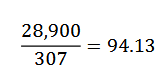
There are about 94 students per club. This is lower than the U15 average of 236.
C4. Does the student union provide support to clubs? | 1/1 |
The AMS provides additional supports to clubs, including but not limited resource guides and annual awards for clubs.
C5. Does the student union organize events for students? | 1/1 |
The AMS organizes welcome week activities at the start of each fall semester. It has an events schedule on its website, but at the time of writing it has not been updated since April 2024. The AMS contributes to large-scale Queen’s University events such as its annual homecoming celebrations.
C6. Does the student union have club policies and guides to help clubs navigate them? | 1/1 |
There are procedures governing clubs and club funding.
D. Pénalités
D1. Déficits financiers | 0 |
For the financial statements that were available, we did not see a deficit of over 5% of revenue.
D2. Scandals and Negative Publicity | -1 |
We found multiple instances of students expressing concerns about topics pertaining to the AMS.
In fall 2024, an the Queen’s Journal alleged that the AMS Special General Assembly had transparency issues, including but not limited to accessibility challenges with the venue, a “lack of readily available information about the Assembly’s location 24 hours leading up to it”, and “selective moderation” of debates. There were two AMS motions on the Special General Assembly agenda motivated by AMS executive committee members that were critiqued by the Canadian Association of Journalists as suppressing the autonomy of the Queen’s Journal by giving the AMS more power over the student newspaper’s editorial decisions. Both motions failed.
The Queen’s Journal has also alleged other AMS transparency shortcomings, such as “failing to approve invoices for months at a time, in addition to refusing to release an equity consultant’s report on the experiences of marginalized staff at the AMS.”
In March 2025, the Queen’s Journal reported that AMS Clubs Commissioner Stephanie Sahadeo resigned due to allegedly “experiencing harassment and racism from fellow students”, including an alleged incident when she “was pushed to the ground off-campus and shouted at with discriminatory comments about her perceived race by a group who knew her name” as well as another instance when she received “verbal threats”. She also expressed being burnt out from the role. Regarding the alleged harassment and racism, Sahadeo stated, “I have no confirmation as to whether or not this was related at all to my former position at the AMS.”
While these scandals may be indications of emerging systemic challenges that could worsen if left unchecked, it appears that the AMS’ democracy and finances remain intact. The AMS’ checks and balances appear to be robust enough to ensure one governance branch cannot gain an undue power advantage, as exemplified by students voting against Special General Assembly motions to reduce the Queen’s Journal’s autonomy that were supported by AMS executives.
Overall, the AMS is a capable, well-performing student union. Here are some of the AMS’ other success areas that stood out to us:
We believe that the AMS should focus on increasing its influence beyond the provincial level as well as revamping its extracurricular political economy to give its clubs an engagement boost. Its website, while detailed, would benefit from some corrections and updates to ensure information like contact emails for representatives and meeting minutes are easily and publicly accessible online.
Services
We recommend that the AMS build upon its existing annual reports to track more metrics regarding the number of students who were helped by each service each year. This will help give students and their representatives clear ideas of which services are reaching their target groups and which may need extra support or may no longer be relevant if the student body’s needs have changed. One area that we recommend it prioritizes would be developing legal aid services for students. The AMS is in a strong place to think about providing new services that have never been tried before.
Representation & Advocacy
The Queen’s AMS should strive to get formal recognition as an organization on Queen’s University governing bodies instead of the student seats going to separately elected students who are likely without budgets and resources to do large-scale student consultations and mobilizations.
We believe the AMS can improve its advocacy by doing more at national and international levels. A policy of isolationism when it comes to the national level may result in the AMS being left out of policy consultations on national policies that impact its students. While there are multiple national student unions that currently exist in Canada, we recommend that the AMS should pick the side it believes is best, put forward any motions to reforms the national student union it chooses that it believes are necessary, and actively contribute to the national student movement. We encourage the AMS to also inform itself about the Global Student Forum and benefits of UN consultative statuses the AMS may be eligible for. There are also international subject-based student governments (e.g. the International Federation of Medical Students’ Associations) that may be of interest to sub-campus subject-based student governments within the AMS’ jurisdiction if they are not involved with such international organizations already. A larger network of allies beyond large undergraduate research-intensive universities in Canada would allow the AMS to share its success stories with other student unions, in Canada and beyond, that may be interested in following in its footsteps. For example, the AMS’ judicial system may be one such practice that could be recommended for other student unions at campus and supra-campus levels.
As stated above, ensuring the AMS website is up to date with representative contact information, meeting minutes, campaign spending limits, and other relevant information would be beneficial, so students can easily learn about how their student union works and what it is doing.
Économie politique parascolaire
We recommend that the AMS strive to increase the number of clubs that receive funding each year and increase its bursary limits for club promotion and new clubs. We recommend that the AMS strive to provide options for up front funding to help low-income students interested in participating in and leading campus clubs.
The AMS should strive to calculate annual metrics such as the percentage of its members that participate in clubs and the aggregate assets of all its clubs so it can track the strength and growth of its extracurricular political economy over time. Cross-tabulating these metrics with other variables may help the AMS identify participation barriers some students may face, allowing the AMS to develop initiatives to alleviate equity gaps that may exist or that may arise in the future. The AMS should include these metrics and information on the state of its extracurricular political economy in its annual reports.


Veuillez utiliser ce formulaire pour nous signaler toute erreur, inexactitude ou information manquante dans l'analyse. Si vous avez des commentaires d'ordre général, veuillez utiliser le Connect form to get in touch with us.
Lorsque vous signalez une erreur, veuillez indiquer les clauses qui doivent être modifiées et proposer des modifications de formulation spécifiques, ainsi que des liens vers toute source pertinente pour étayer vos affirmations.