
 Score total
 Scores par catégorie
Services
Représentation et défense des intérêts des étudiants
Économie politique parascolaire
Fondée en
Étudiants représentés
Annual Revenue
University Students' Council (USC) at Western University is a dynamic, well-organized student union that provides a comprehensive array of student services, events, advocacy, and club opportunities to enhance student life. USC’s strengths include consistent and effective student representation and advocacy, robust governance structures, a highly visible executive team, and well-organized student events and club supports fostered by specialized executive portfolios. Opportunities for USC are primarily related to formalizing transition periods, standardizing advocacy tracking, leverage alumni networks, and enhancing public transparency.
A1. What is the service spending per capita? | 0/1 |
The audited financial statement for the 2024 fiscal year specified the following spending:
Service | Spending |
Events and building services | $904,958 |
Hospitality services | $5,154,330 |
Retail and service operations | $528,675 |
Campus organizations | $1,370,937 |
Total: | $7,958,900 |
The 2023/2024 service spending is $7.958,900. The Fall 2024 undergraduate enrollment at Western University was 37,300.
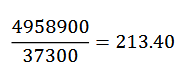
The per capita service spending is $213.40/student, below the U15 average of $381.83.
A2. What core services does the union offer? | 6.5/8 |
Health Aid (1)
Each full-time undergraduate student is offered a health plan through PurpleCare, a USC-run healthcare plan overseen by elected representatives. Services include access to Campus Vision, UCC Dental, Western Chiropractic, and Western Health & Wellness Services.
Aide financière (1)
USC provides grants and awards to its members, including the Future of Western Award, the USC Alumni Award, and the Student Award of Merit. Additionally, USC refers members to university financial aid resources.
Academic services (0.5)
USC refers its members to indirect supports offered by the University, including: academic counselling through the Registrar’s office, the Writing Support Centre, the Peer Assisted Learning (PAL) centre, and tutors and academic support at the Indigenous Student Centre.
Legal aid and/or mediation (0.5)
USC does not directly provide legal or mediation services, but instead refers its members to the Community Legal Services (CLS), a community legal clinic operated by the university’s Faculty of Law.
Aide alimentaire (1)
USC fully operates its Food Support Services on-campus food bank, also running campaigns and events to educate and advocate for better food security for students.
Counseling aid (0.5)
USC has a Peer Support Centre, a resource hub which refers USC members to a wide array of external counselling resources, including ConnexOntario, Good2Talk, as well as individual counselling, et crisis counselling through Western’s Health & Wellness services.
Aide au transport (1)
Every full-time undergraduate student receives a London Transit Bus Pass valid for unlimited rides 7 days a week, funded directly by the student union. USC created the Mustang On Demand app which offers night transportation after the bus pass stops operating. The student union also provides free late-night shuttles during exams, a grocery shuttle, et affiliate shuttle services.
Installations sociales et de divertissement (1)
The Wave and The Spoke are USC-operated casual dining facilities on campus. They also offer bookable spaces, food & catering spaces at the Wave, and equipment rentals. The USC also manages venues and organizes a variety of social events and annual initiatives, like the Early Outreach Conference (REACH).
A3. What other services does the union offer? | 1/1 |
USC operates a wide variety of additional services, including: Campus Gear (custom merchandise and clothing), the USC Voice (journalism outlet), the USC Storefront, the USC InfoSource, USC Charity, Enviro USC, PrideUSC, the Income Tax Clinic, Free the Dot (menstrual products) the PurpleStore, and the USC Public Arts Commission (PAC).
B1. Is the union's governance structure clear and transparent? | 4/4 |
The governance structure is clearly outlined in a way that is easily accessible without overlaps or duplications (1)
USC outlines its governance structure its "Who We Are" webpage, using clear visuals to demonstrate the dynamics between Western students, the University Student Council’s executive body, staff of the USC, and the USC Board of Directors. Individual webpages under the “Who We Are” tab further outline the role and authority of its student council, Board of Directors, and its Executive Team.
Autorité et responsabilité sont clairement définies à chaque niveau de gouvernance (1)
USC uses an updated Policy Manual Packet which includes its bylaws, conflict of interest policies, removal procedures, elections rules and policies, code of conduct rules, and more. The packet packages together governance policies across four main categories: council policies, board policies, executive council policies, and elections governance committee policies. The bylaws outline clear authority, operational, and procedural policies at all authority levels.
For example, the Bylaw #3 – Executive Bylaw outlines the various definitions of authority, including executive vs legislative branches (section #1), while Section 2 covers the authority of the executive (sections #2.1-2.4), responsibilities of the executive branch (section #2.5), and its accountability to the Council (section #3) and to the Board (section #4).
Procédures transparentes de destitution et de succession (1)
The Club Executive Removal Procedure (found in the Policy Manual Packet) outlines transparent removal and successful policies for club executives, including the President and Vice Presidents. Bylaw #1 – Corporate Bylaw provides details on the removal or discipline of Board Directors (Section #5.3), and the replacement of vacant Board positions (section #5.4). Further measures include discipline or removal of executive officers (Section 10.5), addressing vacancies for executive officer positions (section 10.6), and discipline of councillors (section #12.7). Executive officers (comprising USC President and Vice Presidents) are subject to discipline, suspension, or removal through the Executive Officer Accountability and Discipline Policy.
Évaluations périodiques et impartiales des performances du personnel (1)
All full-time regular employees, including both union and non-union staff members, are required to receive a performance appraisal bi-annually, according to the Performance Appraisal Procedure. This includes a mid-year review and a final review.
B2. Is the union actively involved in representing its students? | 4.5/5 |
Membership in national/provincial student unions (1)
Western USC is a member of Ontario Undergraduate Student Alliance (OUSA), often serving in prominent leadership positions within the organization. For example, two of the last four OUSA Presidents (2024-2025, 2022-23) have been USC student executives. USC Membership details for OUSA are further outlined in the OUSA Policy and Procedure.
Proof of student representation in decision-making structures (0.5)
The USC President does not have direct student representation in the university’s major decision-making bodies, sitting as a non-voting observer on the Western University Senate. While there is no allocated USC seat on the university’s Board of Governors, several positions for elected representatives for undergraduates (2 positions) and graduate students (1 position) are available.
Student consultations (1)
Formally, USC is required to host several consultations with the student body. The Speak of Council Terms of Reference requires the Council Speaker to coordinate regular meetings, including the Annual General Meeting. Section 4.2.2 of the OUSA Policy and Procedure requires consultation with stakeholders (ostensibly including students) when writing policy papers. Furthermore, the Executive Council Terms of Reference requires the USC executive to provide consultation (ostensibly with students) on the USC annual budget (section 2.1.6)
USC also hosts a number of consultations and town halls with students on an ad hoc basis. Examples include: the 2018 USC Townhall on the provincial government’s recently announced Student Choice Initiative, and the April 2024 USC townhall with Western University’s Chief AI Officer to discuss student concerns. Additionally, student feedback through social media channels (eg USC Instagram account) is regularly used to inform USC advocacy, such as launching a new survey and student feedback session with London Transit in response to unpopular changes to London bus routes. The recently created VP Student Engagement position leads USC efforts to engage and consult with the student body, as directed by the student engagement strategy.
Advocacy and activism campaigns that bring tangible results (1)
USC engages in a wide range of university, municipal, provincial, and federal advocacy initiatives and campaigns with documented impacts. These include: informing the Blue Ribbon Panel’s final recommendations on provincial post-secondary spending, securing a three-year $38,000 allocation from the City of London towards the USC Early Outreach (REACH) program; and advocating for and procuring an $800,000 investment from the university in 2022 for the Free the Dot program (for free menstrual health products). Further advocacy wins are extensively promoted on the USC Instagram account.
Additionally, USC outlines its key advocacy targets for the year through its annual executive roadmaps, advocates consistency with university, municipal, provincial, et federal stakeholders, and provides presidential progress reports to demonstrate advocacy successes on roadmap targets. Most recently, these advocacy wins included: increasing study spaces, launching a grocery shuttle service, expanding the Free the Dot initiative, and creating a student consultation on bus routes. Advocacy efforts are also supported by a repository of USC-written policy papers on core student issues, including mental health, student housing, and tuition.
Participation aux affaires municipales (1)
USC has well-documented participation in municipal affairs stretching back decades. The most prominent (and ongoing) example is their advocacy with the London Transit Commission (LTC), having originally secured an unlimited transit pass for all full time Western students back in 1998. Their ongoing municipal negotiations with the LTC, including securing a freeze on contract renewal costs in 2023, has helped secure continued contracts, including the most recent student Bus Pass contract (valid through to 2027).
Additionally, USC has negotiated signed agreements with the municipality, such as the 2016 Principles of Collaboration - made between the City of London and USC. They have also recently launched the 2025 inaugural Transportation Fair (featuring representatives from the London Transit Commission, VIA Rail and London City Council), and hosted a men’s varsity lacrosse game with Indigenous community leaders to promote National Day for Truth and Reconciliation.
B3. Are there opportunities for democratic engagement? | 6.5/8 |
Taux de participation électorale (1)
The latest election results show a 29.4% voter turnout in 2025, a total of 11,077 out of 37,645 eligible voters. This marks a significant increase from the previous year’s election, which had a 21.4% voter turnout.
Is the election policy enacted and modified by a legislative body composed of students? (1)
USC’s election policy is regulated by its bylaws, which are available on the website through the Policy Manual Packet (Bylaw #2 - Election Bylaw). The policy is regularly updated by the USC Board of Directors.
Regulation of elections (2)
Structure of elections (1)
USC elections are primarily governed by Bylaw #2: Election Bylaw, which establishes the necessary rules and procedures for all USC elections, referenda, and plebiscites. [Bylaw #1 – Corporate Bylaw, 1.7; Bylaw #2: Election Bylaw, 1]. Central authority for the electoral process rests with the Elections Governance Board [Bylaw #2: Election Bylaw, 4.1], with responsibilities including investigating and applying sanctions for electoral violations [Bylaw #2: Election Bylaw, 4.1], and ensuring procedural alignment with the USC Electoral Code [Bylaw #2: Election Bylaw, 10.2].
USC elections determine the occupants of both executive and legislative roles. The Executive Officers (specifically the President, Vice-President External Affairs, and Vice-President University Affairs) are elected positions subject to the procedures outlined in Bylaw #2 [Bylaw #1 - Corporate Bylaw, 10.2]. Similarly, the USC Council is composed of undergraduate representatives from each faculty and affiliate college who are elected in accordance with Bylaw #2 [Councillor Terms of Reference, 6.1].
Are there eligibility requirements? (1)
Eligibility requirements for candidates in University Students' Council (USC) elections vary depending on the position sought, but certain criteria apply universally to ensure student status and adherence to electoral rules.
For all USC elections, candidates must be an undergraduate student registered at Western University or one of its affiliates (e.g. King’s University College and Huron University College) [Bylaw #1 - Corporate Bylaw, 1.2.11; Bylaw #2: Election Bylaw, 2.1.16, 2.1.17].
Eligibility to run for office generally requires a student to be registered in the specific Faculty or Affiliate college they wish to represent [Bylaw #2: Election Bylaw, 6.4].
Failure to attend a mandatory candidates meeting results in ineligibility to run [USC Electoral Code, 2.1.2; USC Electoral Code, 2.1.3]. Furthermore, candidates are obligated to uphold the principles of fair and ethical campaigns and must adhere to all specific rules outlined in the USC Electoral Code regarding campaign conduct and required disclosure obligations [Bylaw #2: Election Bylaw, 7.4].
A critical eligibility prerequisite for all candidates is required attendance and certification of having attended the Mandatory All-Candidates Meeting, which communicates essential electoral information, procedures, and timelines [USC Electoral Code, 2.1.1; USC Electoral Code, 1.10], and failure to do so results in immediate ineligibility to run [USC Electoral Code, 2.1.2; USC Electoral Code, 2.1.3; USC Electoral Code, 9.5]. Additionally, a student may only run for one elected position during any given election period [Bylaw #2: Election Bylaw, 6.5]. For the high-level executive positions (President, Vice-President External Affairs, and Vice-President University Affairs), the candidate must also have been a Student for two (2) consecutive semesters at the time of election [Bylaw #1 - Corporate Bylaw, 10.3.1].
There are also restrictions preventing conflicts of interest, as individuals seeking an executive position must not be or have been Directors on the Board for a minimum of two academic terms [Bylaw #1 - Corporate Bylaw, 10.3.4], and current Executive Officers are ineligible to seek re-election or appointment to any executive role for the following term [Bylaw #1 - Corporate Bylaw, 10.3.2].
For positions elected to the USC Council representing specific constituencies, such as Faculty or Affiliate Council seats, a student must be registered within that particular Faculty or Affiliate college at the time of nomination [Bylaw #2: Election Bylaw, 6.4]. They must continuously maintain their registration as a student in that specific constituency for the entire duration of their term; failing to do so results in ceasing to be a Member [Bylaw #1 - Corporate Bylaw, 12.2.1]. Students enrolled in dual degree programs face additional requirements, as they are restricted to running for office in only one of the Faculties or Affiliates in which they are enrolled [Bylaw #2: Election Bylaw, 6.7]. While USC generally relies on records provided by the University Registrar to confirm eligibility and enrollment status [Bylaw #2: Election Bylaw, 6.6; Elections Governance Board Nomination Procedure, 6.1], dual degree students may submit a written request to override their default constituency and choose to run in the Faculty or Affiliation of their choice [Bylaw #2: Election Bylaw, 6.7.2; Elections Policy on Dual Degree Students, 1.1]. Finally, individuals seeking election as Directors on the Board of Directors must be enrolled as a full-time or part-time undergraduate student at Western University at the time of election and throughout their term [Bylaw #1 - Corporate Bylaw, 5.6].
Electoral Speech Protections (1)
Are students allowed to run negative campaigns? (1)
Restrictions on electoral speech and campaigning activities for University Students' Council (USC) elections are defined primarily within the USC Electoral Code and must adhere to principles of fair, ethical, and legal conduct.
Candidates and Campaign Volunteers are generally responsible for ensuring that all campaigning and Campaign Materials comply with all policies and regulations of USC, Western University, and all municipal, provincial, and federal laws and regulations [USC Electoral Code, 3.1.6; Bylaw #2: Election Bylaw, 7.4].
Specifically, campaign activities must respect the principles of fair and ethical campaigns [USC Electoral Code, 3.1.2] and avoid actions that are illegal, threatening, harassing, defamatory, or in violation of privacy or confidentiality standards, as these are grounds for restriction [Club Bill of Rights, 1.1.4]. Campaigning is categorized, and certain severe offenses (such as voter intimidation, coercion, harassment, discrimination, or coordinated disinformation campaigns) will typically result in significant penalties or disqualification [USC Electoral Code, 4.8.1; USC Electoral Code, 4.8.2; USC Electoral Code, 4.8.3].
Is there a campaign spending cap? (1)
The campaign spending caps for candidates in University Students' Council (USC) elections are defined within the Election Governance Board Campaign Finance Procedure (section #4.1) These limits apply to the combination of a candidate’s expenses and contributions [sections 4.2, 5.1].
The specific spending limits for each type of candidate are as follows:
Type of Candidate | Spending Limit | Bylaw/Procedure |
Presidential candidates | $1,500 | Election Governance Board Campaign Finance Procedure, 4.2.1 |
Divisional candidates (excluding Faculty President candidates) | $200 | Election Governance Board Campaign Finance Procedure, 4.2.2 |
Faculty President candidates | $400 | Election Governance Board Campaign Finance Procedure, 4.2.3 |
Vice-Presidential candidates | $400 | Election Governance Board Campaign Finance Procedure, 4.2.4 |
For the purpose of calculating the average, the average of the spending limit for presidential candidates and vice-presidential candidates was calculated ($1500 + $400) / 2 = $900)). This spending cap is far above the average of $373 among U15 universities.
Surveillance des élections : dépôt de plaintes et d'appels (1)
For all other appeals, the USC Appeals Board is the dispute resolution body of USC. However, in the case of submission of electoral complaints and appeals as defined under the USC Electoral Code [section #9.1.1], this responsibility falls to the Elections Governance Board or EGB [section #1.7]
To initiate a formal complaint regarding an alleged violation, the Complainant must submit the complaint to the EGB using USC’s online submission form [sections #9.1.1, 9.1.3].
The EGB has strict rules regarding timing and admissibility: complaints must be submitted within 24 hours of the offence taking place or being discovered, but no later than four hours following the end of the Balloting Period [section 9.1.3]. The Complainant must also acknowledge that filing a vexatious or defamatory complaint may result in referral to the University for conduct review, and failure to provide sufficient evidence may lead to dismissal [section 9.1.1.6]. The Independent Investigator reviews all complaints to ensure compliance, determines if the matter is within the EGB's jurisdiction, and discards any complaint deemed frivolous, vexatious, or having no prospect of success [sections 9.1.4; 9.1.7; 9.1.8]. If the complaint is deemed legitimate and within jurisdiction, the Independent Investigator assigns it an preliminary classification (mild, moderate, or severe) and directs or conducts an investigation [section 9.1.9].
Following the EGB's decision, parties have the right to appeal to the USC Appeals Board [Clubs Operating Policy, sections #5.5.1; 6.6.9.1.a]. The Appeals Board serves as the final appeal option for election violations [Clubs De-Ratification Procedure, 1.1.7].
The Appeals Board is structured as the dispute resolution body for the University Students' Council (USC), empowered to hear cases related primarily to clubs and election violations [Appeals Board Terms of Reference, 2.1, 11.1].
The Appeals Board is composed of the following members:
There are restrictions on who can serve on the Appeals Board:
An appeal of an EGB judgment must be submitted to the Appeals Board within five (5) days of being informed of the decision [Clubs Executive Removal Procedure, 6.1; Clubs Hearings and Sanctions Procedure, 8.1.1; Clubs Operating Policy, 5.5.1; Clubs Operating Policy, 6.6.9.1.a; Clubs Ratification Procedure, 5.2]. For election disputes during the Election Period, the Appeals Board is prepared to hear expedited hearings within twenty-four (24) hours of the Application being granted, given the requirement for rapid adjudication [Appeals Board Terms of Reference, 17.1; Appeals Board Terms of Reference, 17.2].
The Appeals Board issues a decision, that judgment is final, binding, and conclusive, and is not open to further question or appeal in a court on any grounds, with the sole exception of appeals regarding Senate or Board of Governors elections, which may be appealed to the University Secretariat [Appeals Board Terms of Reference, 11.5; Appeals Board Terms of Reference, 11.5.1].
Can students initiate referenda? (0.5)
Referenda begin with a motion passed by USC Council [Referendum Policy, 3.1; 3.2]. Council holds sole jurisdiction over student fees but may defer fee decisions to voters via referendum [Bylaw #4 - Financial Bylaw, 2.3; 2.3.1].
To initiate a referendum, Councillor(s) must conduct substantial student consultation involving at least 200 students across three faculties and consult with the USC President, Chair of the Board of Directors, and Senior Manager, Advocacy and Government Services [Referendum Policy, 3.2.1]. The referendum proposal must include consultation results and participating students' signatures [Referendum Policy, 3.2.1].
Given that students cannot directly initiate referenda, no full points have been awarded under this criterion.
B4. Is the student union transparent in its operations? | 5/5 |
Governing documents (1)
Governing procedures (bylaws, policies, terms of references) and reporting documents (long-term strategic plans, budgets) are all publicly available on the "policies and bylaws” webpage. All governing documents are packaged under the Policy Manual Packet.
Other guiding documents (eg USC Charter, Sustainability Framework, EDI Framework) are found on its “Who We Are” webpage. Elections documentations, including forms and elections results, are found on the USC Elections webpage. Meeting minutes for the Board of Directors, et Council are also accessible as direct downloads.
États financiers annuels vérifiés/révisés (1)
USC maintains an archive of audited financial statements going back to 2017-2018. Bylaw #4: Financial Bylaw details procedures around financial transparency, including clear requirements for USC to post its audited financial statements publicly (section #4.1).
Annual budget (1)
The USC maintains an archive of nnual budgets going back to 2013-24.
Meeting minutes of the Legislative Body (1)
Council meeting minutes are available on the official USC website.
Annual report or Strategic Plan (1)
Previous strategic plans are available on the USC official website from 2002 to 2017. The Executive body currently develops annual Executive Roadmaps (2019-present) to guide USC strategic activities.
B5. Does the student union have an accessible communication strategy? | 3/3 |
Site web organisé et à jour (1)
USC maintains an up-to-date official website with comprehensive information and news updates.
Réseaux sociaux actifs et actuels (1)
USC has active social media presences on platforms such as LinkedIn, Facebook, X (formerly Twitter) and Instagram. In particular, USC uses its Instagram account most commonly provide current information and engage students through weekly updates (often multiple times a week).
Disponibilité des coordonnées des dirigeants élus de l'association étudiante et du bureau de l'association étudiante (1)
Contact information is publicly available for both student union executives, et council members. A generic contact form and generic email is provided for contacting USC staff.
C1. Is the club system managed by the student union? | 1/1 |
The student union’s Clubs Governance Board oversees the clubs system. Its mandate, membership, and meeting minutes are available on the USC official site.
C2. Is there funding available for clubs? | 1/1 |
Clubs (as ratified organizations) are eligible to apply for monetary assistance from the Grants Fund for undergraduate student projects, as outlined in the Grants Fund Policy. (sections #1.2; 2.1.1). The total amount in the Grants Fund is approximately $100,000 [section #5.1]. Individual grants given out from the Grants Fund range from a minimum of $100 to a maximum of $10,000 per eligible student/group [section #5.3.1]. Grant applications are preferred if the sponsoring body commits 10% of the total requested amount [section #3.1.3]. Granted funds allocated for initiatives are deposited into USC-affiliated club accounts [section #6.2].
USC Clubs Finance Manual clarifies details on the USC clubs system, budgets, club executive responsibilities, and relevant bylaws.
C3. What is the number of students per club? | 1/1 |
There are 243 clubs listed on the USC website as of November 2025. The undergraduate enrollment at Western University is 37,300 as of Fall 2024.
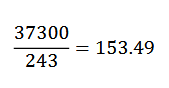
There are about 153 students per undergraduate club. This is lower than the U15 average of 236.
C4. Does the student union have club policies and guides to help clubs navigate them?
| 1/1 |
USC has the following policies and procedures that govern clubs: the Club Executive Removal Procedure, Clubs Advisory Committee Terms of Reference, Clubs and Faculty Council Event Approval Procedure, Club Bill of Rights, Clubs Code of Conduct, Clubs Constitution Template, Clubs Constitutional Amendment Procedure, Clubs De-Ratification Procedure, Clubs Discrimination Harassment and Violence Reporting Procedure, Clubs Election Procedure, Clubs Finance Procedure, Clubs Governance Board Terms of Reference, Club Hearings and Sanctions Procedure, Clubs Operating Policy, and Clubs Ratification Procedure. These procedures and policies are located on pages 177-246 of the Policy Manual Packet document.
The USC also has a number of guides designed to help clubs. They include: Clubs Finance Manual, Club Annual Budget Template, as well as other manuals which are available on the Clubs Resources page.
C5. Does the student union provide extra support to clubs? | 1/1 |
USC Reservations is an all-in-one solution that provides bookable spaces, food & catering, and equipment to USC-ratified clubs, who receive top priority when booking services over other organizations. Additionally, USC runs the Western Link — a resource portal for clubs and events on campus.
C6. Does the student union organize events for students? | 1/1 |
USC organizes orientation, social events, charity initiatives, and the annual Early Outreach Conference (REACH). The student union regularly updates its events webpage, providing useful links, FAQs, and resources to students.
D1. Déficits financiers | 0/5 |
For the financial statements that were available over the past 5 years, we did not see a deficit of over 5% of revenue. The only deficit in recent years was in 2018-19 (as the result of the COVID-19 pandemic), which saw a deficit of $257,446 by year’s end.
D2. Scandals and Negative Publicity | 0/5 |
We did not find any major scandals or negative publicity of note.
Overall, USC performs well across all three dimensions, providing a wide range of student services, having strong student representation and advocacy activities directed by robust governance structures, and a thriving extracurricular political economy. There is opportunity to improve executive transition periods, standardize advocacy tracking, leverage alumni networks, and enhance aspects of public transparency.

Veuillez utiliser ce formulaire pour nous signaler toute erreur, inexactitude ou information manquante dans l'analyse. Si vous avez des commentaires d'ordre général, veuillez utiliser le Connect form to get in touch with us.
Lorsque vous signalez une erreur, veuillez indiquer les clauses qui doivent être modifiées et proposer des modifications de formulation spécifiques, ainsi que des liens vers toute source pertinente pour étayer vos affirmations.