
This profile is dedicated to the memory of 2022-2023 WUSA President Stephanie Ye-Mowe who passed away in 2023. May good student democracy yet prevail.
 Score total
 Scores par catégorie
Services
Représentation et défense des intérêts des étudiants
Économie politique parascolaire
Penalties
Fondée en
Étudiants représentés
Annual Revenue
The Waterloo Undergraduate Student Association (WUSA) has served University of Waterloo undergraduates since 1967, offering a wide range of comprehensive services, including affordable food services, equity-focused financial aid options, and a wide range of social and entertainment facilities to enhance campus life. WUSA’s strengths include its strong advocacy record on student issues like tuition and housing, extensive support for over 200 clubs and student societies, and a clear governance structure led by a Board of Directors that promotes transparency and accountability. The association empowers students through many volunteer, leadership, and club opportunities, fostering a vibrant community at the university. However, WUSA has faced past governance challenges such as executive role confusion and leadership burnout, which prompted a governance review and restructuring to improve clarity, accountability, and member engagement. Continuous efforts to enhance student participation and clarity in decision-making remain key areas for growth.
A1. What is the service spending per capita? | 1/1 |
The audited financial statement for the 2024 fiscal year specified the following spending:
General Fund | $10,885,721 |
Dental Plan Fund
| $141,785 |
Health Plan Fund | $152,775 |
Legal Protection Fund | $23,478 |
Capital Fund | $36,619 |
UPass Fund | $177,746 |
Orientation Fund | $741,706 |
SRP Fund | $149,735 |
Publications Fund | $269,281 |
Societies Fund | $2,702,908 |
Total: | $15,281,754 |
The 2023/2024 service spending is $15,281,754. The Fall 2024 undergraduate enrollment at Waterloo University was 35,400.
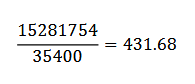
The per capita service spending is $431.68/student. This is higher than the U15 average of $381.83.
A2. What core services does the union offer? | 7/8 |
Health Aid (1)
WUSA directly provides a health and dental plan to all full-time and part-time undergraduate students, which includes up to $50,000 per benefit year for gender-affirming medical care. The student association also runs the Empower Me, a mental health and wellness service providing 24/7 access, culturally-sensitive and gender-inclusive access to mental health professionals (e.g. psychologists, psychotherapists, social workers) and a full repository of on-campus resources. WUSA also operates WUSA Mates, a student well-being network of upper year students to help students navigate student life and wellness challenges, which includes a wellness lounge, and both in-person and online drop-in peer support.
Aide financière (1)
WUSA does provide a limited number of awards (including WUSA Leadership Awards, WUSA Excellence in Undergraduate Teaching Awards, and WUSA Volunteer Awards), however these are only available to student leaders and staff members. WUSA does however provide funding directly through the Student Life Endowment Fund (SLEF) for student well-being and community initiatives, and the Equity, Opportunity, and Innovation Fund (EOI) for student-led equity and community projects. Additionally, the student union provides the Undergraduate Student Capital Program, a non-application based fund to expand key student spaces across campus. Lastly, the student union does run the Change Engine, which provides funding directly to select students to develop their advocacy initiatives.
Academic Aid (0)
We could not find evidence of academic or tutoring services offered by WUSA.
Legal and and/or mediation (1)
WUSA directly provides its Student Legal Protection Program, which provides legal advice on any subject and representation on issues relating to academic rights, co-op and employment, or housing and tenancy. The student union also runs WUSA Centre for Academic Policy Support (CAPS), a confidential student support service to assist undergraduates with navigating academic policy, including how to file petitions, grievances, and appeals. Additionally, WUSA provides legal assistance related to gender affirming care, which includes name and gender marker changes -- all of which is covered under the expanded student health insurance plan.
Aide alimentaire (1)
The student union directly manages the WUSA Food Support Service, a non-profit service that provides confidential assistance and food hampers to students experiencing food insecurity. WUSA also recently launched its Pay-What-You-Can (PWYC) pilot program, a food service run out of The Bomber pub that provides nourishing, ready-to-eat meals to students in need.
Assistance psychologique (1)
WUSA runs the Centre for Academic Policy Support which helps students to navigate academic policy in the instances of filing petitions, grievances and appeals.
WUSA also refers members to the Office of the Ombudsperson (run by the University of Waterloo), which provides students with academic assistance in navigating university policies, rules, and procedures.
Aide au transport (1)
WUSA provides a discount bus service to the GTA (FedBus), directly funds a universal bus pass (U-Pass), and operates a Bike Centre.
Installations sociales et de divertissement (1)
The student union operates the Student Life Centre, which features student study spaces, food and drink options (e.g. the Bomber campus pub), and multipurpose event spaces. WUSA directly manages the Turnkey Desk, which acts as a 24/7 service hub for a wide variety of services, including booking multipurpose rooms, navigating transportation options, and finding lost items.
A3. What other services does the union offer? | 1/1 |
WUSA runs many additional services, including the WUSA thrift shop, the Flock Shop (24/7 on-campus convenience store), the Dispensery café and lounge, the Bomber campus pub, the Chaska restaurant, Smarty Pants ice cream shop, and the Wok Stop restaurant.
B1. Is the union's governance structure clear and transparent? | 4/4 |
The governance structure is clearly outlined in a way that is easily accessible without overlaps or duplications (1)
WUSA uses a combination of interactive tools, structural diagrams, and clear text on its “Student Bodies” webpage to outline the governance structure, and relationships between its various parts: its Board of Directors, staff, and membership (i.e. all Waterloo undergraduate students).
Autorité et responsabilité sont clairement définies à chaque niveau de gouvernance (1)
Authority and accountability are defined under WUSA Bylaws, which are available on the “Library” webpage. Authority is further categorized (under these bylaws) by branch of governance, covering Membership (section #3), Board of Directors (section #5), Officers (section #9), and Committees (section #10). The Board, consisting of elected student members (sections #5.02; #9.01), are responsible for oversight of the organization, while staff and executives manage daily operations under the Board’s direction. The Executive Director is under the direct supervision of the Board (section #9.05), and Membership ultimately has authority over the Board of Directors (section #5.03).
Procédures transparentes de destitution et de succession (1)
The Bylaws outline clear removal and succession procedures, including removal of directors (section #5.03), the executive director (section #9.11), and staff (section #9.11), as well as the replacement procedure for Board vacancies (section #5.04).
Évaluations périodiques et impartiales des performances du personnel (1)
Periodic and impartial performance evaluations of staff are part of the governance framework, as outlined under the WUSA Board Policy Manual. Section 13 covers the requirement for annual evaluations of the Executive Director’s performance every February – a responsibility to be carried out by the Board of Directors (section #2). The Annual Governance Calendar further clarifies staff performance deliverables, including the Corporate Performance Report (due each July).
B2. Is the union actively involved in representing its students? | 5/5 |
Membership in national/provincial student unions (1)
WUSA is a member of both the Ontario Undergraduate Student Alliance (OUSA) and the Alliance canadienne des associations étudiantes (CASA).
Proof of student representation in decision-making structures of the university (0.5)
Student representatives participate in university governance, having a voting seat on the University of Waterloo Senate according to its Senate Bylaw 3 regarding selection of members (sections #1 and #2). They also sit on the University’s Board of Governors, which has positions for three undergraduate and two graduate student representatives. However, it should be noted that these latter seats are not specifically designated for WUSA, according to the Board of Governors Bylaw 1.B.
Student consultations (1)
WUSA hosts multiple student consultations on an ad hoc basis, such as town halls (eg Student Sustainability Committee Town Hall in 2022), and strategy consultations (eg Focus Groups on Student Governance in 2025). WUSA also regularly engages membership in student surveys (eg Student Services on Campus survey in October 2025).
Advocacy and activism campaigns that bring tangible results (1)
WUSA regularly releases impact reports to show how their advocacy leads to tangible results. Advocacy wins include: formalizing ownership over the Bomber pub, the establishment of the UPass, expanding health services to cover gender-affirming care, securing the health and dental plan agreement, and signing an agreement with the university to create an Environmental Projects Committee.
Participation aux affaires municipales (1)
WUSA has long engaged in municipal advocacy, most notably in advocating with and securing multiple UPass contracts with the Grant River Transit authority (GRT) to provide full transit services to students. The student association directly engages in advisory bodies with the City of Waterloo, including the Town and Gown Committee. Recent executive reports show that the student association continues to engage with Waterloo Regional Police Services (regarding installation of CCTV cameras in student areas), local news agencies (regarding the Ontario government’s Bill 33), and the City of Cambridge (regarding the ION Stage 2 light-rail transit expansion).
WUSA has long engaged in advocacy with the university, including securing 2020 Memorandum of Understanding and the 2025 Memorandum of Understanding with the university, to formalize WUSA’s authority over societies (eg Arts Student Union, Waterloo Engineering Society, etc). WUSA also works with multiple university and municipal partners and networks, including the Sexual Violence Prevention & Response Office (SVPRO), the Office of Indigenous Relations (OIR), campus wellness services, et community student-run services.
B3. Are there opportunities for democratic engagement? | 7/8 |
Taux de participation électorale (1)
Voter turnout in the most recent 2025 WUSA election was publicly reported at 21.69%, higher than the U15 average of 17%.
Is the election policy enacted and modified by a legislative body composed of students? (1)
WUSA’s election policies are governed by its Elections and Referenda Procedures, which is regularly updated by the student-elected Board of Directors.
Regulation of elections (2)
Structure of elections (1)
The Elections and Referenda Procedures clearly outlines the composition and responsibilities of the body responsible for running WUSA elections, such as the Elections and Referenda Committee (section #4), as well as by-elections and referenda outside of the General Election & Referendum period (section #5).
Fair eligibility requirements? (1)
Eligibility requirements for candidates are stipulated in the Elections and Referenda Procedures section 8.2, with the main requirement being that the candidate must be a member to run for any officer or director position.
Electoral Speech Protections (1)
Are students allowed to run negative campaigns? (1)
While electoral speech protections under section 10 of the Election and Referenda Procedures are in place to ensure fair campaigning, negative campaigning restrictions are governed under section 2, which expressly forbids: the sabotage of opponents’ campaigns, the repeated issuance of frivolous complaints against a candidate, “defaming or knowingly misrepresenting the statement or character of another individual”, making or condoning derogatory or false statements, and aggressive campaigning or harassment of any other individual.
Campaign Spending Cap (0)
Campaign spending is categorized under the Elections and Referenda Procedures section #7.1. Each spending cap is determined by position, with a cap of $150 for a single candidate for WUSA Director. This spending cap is below the U15 average of $373.
Surveillance des élections : dépôt de plaintes et d'appels (1)
There are formal procedures and bodies responsible for elections oversight found under the Elections and Referenda Procedures, including complaint submission (section #6) and appeal mechanisms (section 6.3).
Can students initiate referenda? (1)
According to section 12.2 of the Elections and Referenda Procedures, a referendum may be initiated by a requisition/petition, a members’ meeting, or the Board of Directors.
The procedure for calling a referendum can be initiated through one of three primary methods: a Requisition or Petition from the membership (12.2.a), a Members’ Meeting (12.2.a), or by the Board (12.2.a). Generally, a referendum should not normally be called for any matter that the Board can reasonably consider or approve, excluding those called via member requisition or petition (12.2.c). If a referendum pertains exclusively to a specific constituency, it may also be initiated in accordance with that constituency Society’s governing documents (12.2.b); however, this is contingent on the referendum only concerning and impacting members of that constituency and not altering their relationship with the University or the Federation of Students (12.2.b) and subject to ratification by the Board (12.2.b, 12.7.a).
To call a referendum via a petition, the document is considered valid if it is signed by at least 2900 or ten percent (10%) of the Federation’s voting members, whichever amount is fewer (12.3.a). For the signatures to be valid, the petition must be submitted in writing or electronically (12.3.b), and include, at minimum, each signatory's name, University of Waterloo Student ID, program, term, email, date signed, and signature or electronic equivalent (12.3.b.i-vii). The petition must also clearly state the general nature and intent of the referendum and include any proposed ballot text (12.3.d). The Chief Returning Officer (CRO) or a suitable designate ensures the validity of the petition and its signatures (12.3.c). If the petition successfully garners the necessary valid signatures (12.10.a), the Elections & Referenda Committee (ERC) is responsible for interpreting the text and spirit of the petition (12.4.a) and, if appropriate, consulting with an unbiased Arm’s-length party to draft an unbiased question (12.4.a). Ultimately, the text, method of voting, and timeline for all referenda must be subject to approval by the Board before the measure can proceed to the ballot (12.4.e).
B4. Is the student union transparent in its operations? | 5/5 |
Governing documents (1)
All WUSA’s governing documents are publicly-available on its “Library” webpage, including its bylaws, Articles of Incorporation, WUSA Board Policy Manual, Accessibility Policy, Whistleblower Policy and Elections and Referenda Procedures.
États financiers annuels vérifiés/révisés (1)
WUSA publishes publicly-available audited financial statements annually stretching back to 2012.
Annual budget (1)
WUSA posts its publicly available operational budgets each year for the past several years, stretching back to 2019-20.
Meeting minutes of the Legislative Body (1)
Meeting minutes are publicly available for the Board of Directors, stretching back to 2014. Meeting minutes for Members’ Meetings (formerly “General Meetings”) are available, tracing back to 2013.
Annual report or Strategic Plan (1)
WUSA publishes annual impact reports summarizing key activities, advocacy outcomes, and yearly achievements. Every five years, the student union also publishes its long-range plan to govern strategic activities. Also, WUSA publishes its yearly planning reports, including the most recent 2025 edition.
B5. Does the student union have an accessible communication strategy? | 3/3 |
Site web organisé et à jour (1)
The student union’s official website is up-to-date and well organized.
Réseaux sociaux actifs et actuels (1)
WUSA manages current and active social media channels, including on Instagram, Facebook, et Tiktok. These accounts are updated multiple times a week.
Availability of contact information of student union executives and student union office (1
WUSA has publicly-available contact details (i.e. emails and phone numbers) for all staff members however only email addresses are available for WUSA executives.
C1. Is the club system managed by the student union? | 1/1 |
The student union runs the clubs system at the University of Waterloo.
C2. Is there funding available for clubs? | 1/1 |
There are various forms of funding available to clubs, as well as event and meeting spaces, graphic design, and marketing support. Applicants (including student clubs) can apply for either the Student Life Endowment Fund, or the Equity, Opportunity and Innovation Fund – so long as they are full-time undergraduates at Waterloo. These funds are paid on a term-based schedule (i.e. Spring, Fall, and Winter) as installments to their WUSA club bank account. All clubs must follow strict rules regarding the use of WUSA funding.
C3. What is the number of students per club? | 1/1 |
The most recent number of WUSA clubs registered is 206 according to the Club Listings page.
The total undergraduate students (both full-time and part-time) at UWaterloo is 35,400.

That equates to about 172 students per club, lower than the U15 average of 236.
C4. Does the student union have club policies and guides to help clubs navigate them?
| 1/1 |
The Waterloo Undergraduate Student Association (WUSA) has a club manual available online, which serves as a guide to club funding, forms, spaces, and other resources. The “Clubs” WUSA webpage provides a comprehensive list of how to get involved, finding clubs, FAQs, WUSA Clubs dashboard, as well as WUSA-provided services to clubs (e.g. IT assistance, event planning, marketing support).
C5. Does the student union provide extra support to clubs? | 1/1 |
WUSA provides a wide range of extra supports for clubs, including: a public registry of clubs; a clubs and societies’ fair; events and meeting spaces bookings through the Clubs Community Centre; event ticketing, Office 365 and IT management through the WUSA IT department; graphic design and marketing support; and WUSA volunteer awards (eligibility includes student club members). The WUSA Clubs 101 webpage also provides a clear breakdown of getting started with joining or forming a club.
C6. Does the student union organize events for students? | 1/1 |
WUSA organizes a wide array of events for students, including the Clubs & Societies Fair hosted in the SLC, a regular fair held each term where students can engage with over 200 clubs. Their “Upcoming Events” webpage features recent and upcoming events hosted by WUSA, examples from November 2025 include: Stock the Bank (food drive), Raise the Cultural Caravan (cultural fair), Politics Without the Podium (evening event with MPP Catherine Fife and MP Bardish Chagger), and a Clothing Swap.
D1. Déficits financiers | 0 |
Review of the balance sheet, income statement, and statement of cash flows from audited financial statements over the last five years indicated a budget surplus in all years.
D2. Scandals and Negative Publicity | -3 |
There were allegations of election misconduct by candidates in a WUSA election in February 2024 triggered by a Reddit AMA session. This case alleged that two candidates had violated the negative campaigning rules under section 2.3 of the Elections and Referenda Procedure. However, after review, the ultimate ruling of the Elections and Referenda Officer found that these two candidates did not violate the policy.
In September 2023, the campus student newspaper reported that 2022-2023 WUSA President Stephanie Ye-Mowe shared in a social media post that their experience in the role was “one of … the most disheartening and isolating eight months” of their life, adding, “It’s the reason why I can barely go into SLC without having a full on panic attack, and its the reason why I tried to commit suicide twice this summer.” Ye-Mowe passed away that same month. Ye-Mowe expressed opposition to the restructuring, alleging that risked alienating “representatives from the organization’s work” and feeling “hostility directed towards them” from multiple individuals as a result. In October 2023, students organized a protest on the University of Waterloo campus to oppose WUSA’s governance restructuring, alleging that it “stripped power away from student leaders”. The protesting students also expressed concern about the decision to merge WUSA’s Council and Board of Directors into one legislative body, and felt that they did not have enough input in the restructuring process. We believe this is a serious scandal of an ethical nature that involves multiple individuals, which merits a penalty of -3 based on the index’s scoring rubric.
Overall, WUSA performs well across all three dimensions, providing a wide range of student services, having strong student representation and advocacy activities directed by robust governance structures, and a thriving extracurricular political economy. There is opportunity to improve aspects of student services.


Veuillez utiliser ce formulaire pour nous signaler toute erreur, inexactitude ou information manquante dans l'analyse. Si vous avez des commentaires d'ordre général, veuillez utiliser le Connect form to get in touch with us.
Lorsque vous signalez une erreur, veuillez indiquer les clauses qui doivent être modifiées et proposer des modifications de formulation spécifiques, ainsi que des liens vers toute source pertinente pour étayer vos affirmations.